Every generation believes it is uniquely distracted.
每一代人都觉得,自己这一代格外容易分心。
What is different now is that distraction has been built into the infrastructure of ordinary life.
真正不同的是,今天的分心已经被写进日常生活的基础设施。
A device does not merely wait to be used; it makes a continuous case for why it deserves to be used next.
设备不再只是静候调用;它会持续游说你:下一刻,理应把时间交给它。
Friction is a design choice
阻力从来都是设计选择
Most advice about focus begins with discipline, because discipline is visible and easy to moralise.
谈专注时,人们往往先讲自律——因为自律看得见,也最容易被包装成道德判断。
Infrastructure is quieter: the calendar that accepts meetings by default, the chat tool that rewards instant replies, the office that offers no place to disappear.
基础设施则安静得多:默认接受会议的日历、奖励秒回的聊天工具,以及让人无处暂时消失的办公室。
These systems convert somebody else’s urgency into your default setting.
这些系统会把别人的紧迫,悄悄改写成你的默认状态。
“这些系统会把别人的紧迫,悄悄改写成你的默认状态。”
— 本文核心判断
What the clock cannot see
时钟看不见的成本
Knowledge work is often measured in hours, even though its real unit is the uninterrupted chain of thought.
知识工作常按小时计算,可它真正的计量单位,其实是一条没有被打断的思路。
A five-minute interruption may occupy five minutes on the clock and half an hour in the mind.
一次五分钟的打断,在钟表上只占五分钟,在脑中却可能吞掉半小时。
The missing twenty-five minutes are not laziness; they are the price of rebuilding context.
消失的二十五分钟并非懒惰,而是重建上下文必须支付的代价。
打断本身5 min
心智占用30 min
文中的时间对照示意:真正昂贵的不是提醒本身,而是重建上下文。
Recovering agency
重新拿回主动权
The most effective interventions are rarely heroic.
最有效的改变,往往一点也不英雄主义。
They are small defaults: notifications that arrive in batches, meetings that must justify their length, and shared hours in which no reply is expected.
The point is not to eliminate distraction, but to stop treating concentration as a private battle fought against public machinery.
目的不是消灭分心,而是别再让个人独自对抗整套公共机器,只为换取片刻专注。
Open EditionThe Systems Issue2026-07-18
The Quiet Architecture of Attention
We treat focus as a personal virtue. Increasingly, it is a property of the systems around us.
By zauso Editorial8 minute read
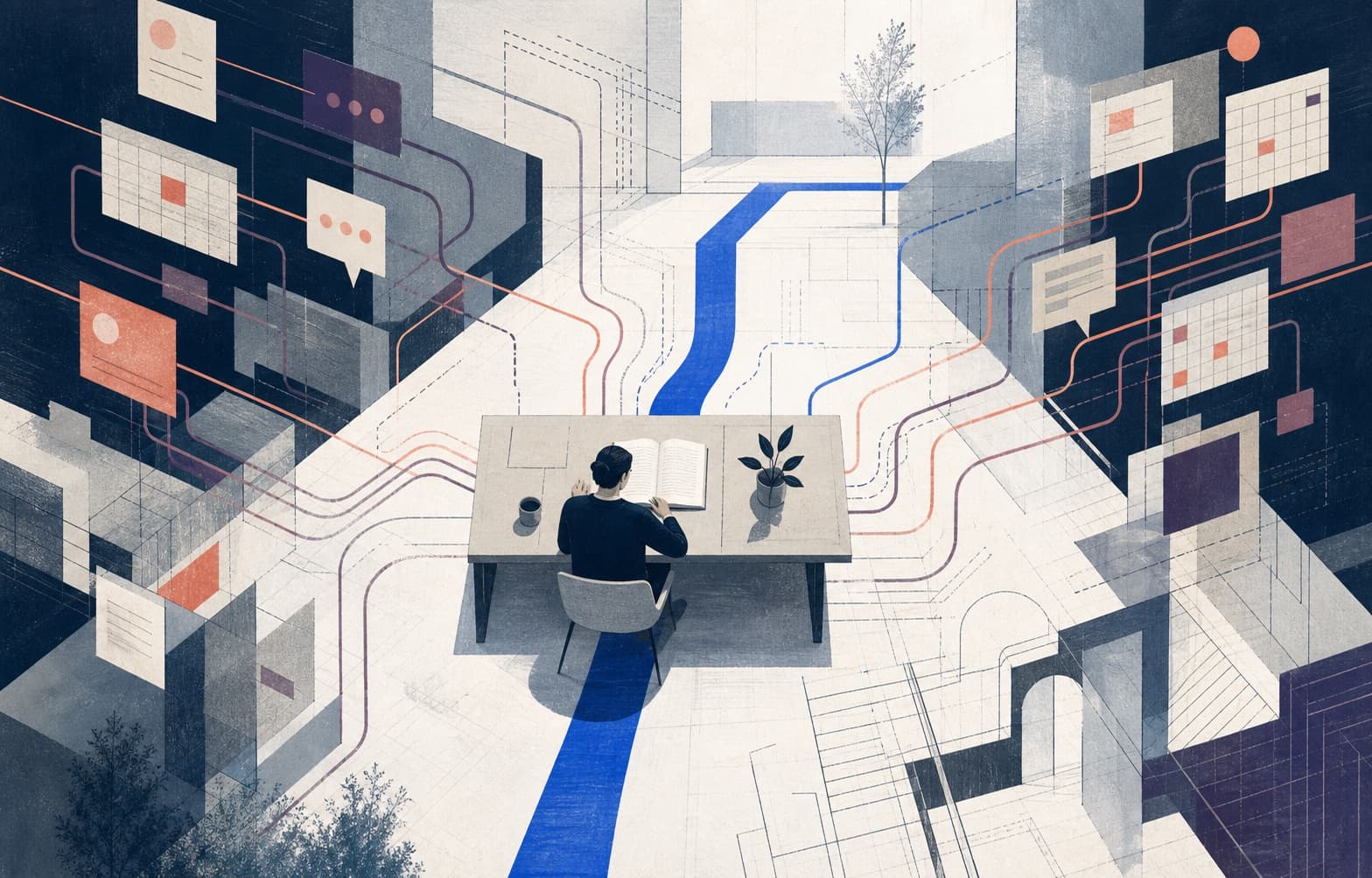
When alerts, meetings and instant replies become defaults, concentration stops being a private test of willpower.Original illustration for zauso
Every generation believes it is uniquely distracted.
What is different now is that distraction has been built into the infrastructure of ordinary life.
A device does not merely wait to be used; it makes a continuous case for why it deserves to be used next.
Most advice about focus begins with discipline, because discipline is visible and easy to moralise.
Infrastructure is quieter: the calendar that accepts meetings by default, the chat tool that rewards instant replies, the office that offers no place to disappear.
These systems convert somebody else’s urgency into your default setting.
“These systems convert somebody else’s urgency into your default setting.”
— The essay’s central claim
Knowledge work is often measured in hours, even though its real unit is the uninterrupted chain of thought.
A five-minute interruption may occupy five minutes on the clock and half an hour in the mind.
The missing twenty-five minutes are not laziness; they are the price of rebuilding context.
Interruption5 min
Mental occupation30 min
An illustration of the essay’s comparison, not an experimental measurement.
The most effective interventions are rarely heroic.
They are small defaults: notifications that arrive in batches, meetings that must justify their length, and shared hours in which no reply is expected.
The point is not to eliminate distraction, but to stop treating concentration as a private battle fought against public machinery.